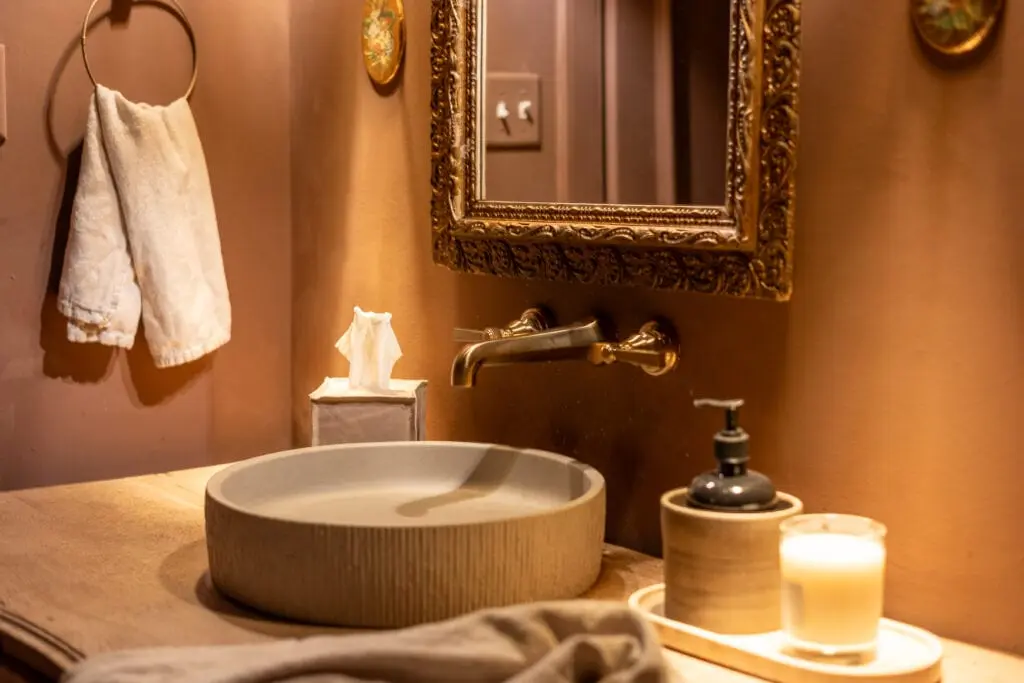
Limewash walls have a soft, chalky, cloudy look that flat paint just can’t copy, and Venetian plaster takes that depth even further with a smooth, polished finish. Both are interior finishes we love, and neither one looks anything like the heavy wall texture of the ’90s. Here’s how they differ, where each one works best, and what to know before you pick one.
Limewash Walls vs Venetian Plaster: What’s the Difference?
Limewash is a thin, brushed lime paint that dries flat and chalky, with soft movement in the color. Venetian plaster is troweled on in layers of lime and marble dust and burnished, so it can go from matte to a real shine. Limewash is the quieter, more relaxed look. Venetian plaster is the showpiece.

The Elegance and Benefits of Venetian Plaster
Venetian plaster is an old Italian technique: thin layers of lime plaster troweled on and burnished until the wall has real depth. This ancient technique, rooted in the rich cultural heritage of Italy, offers a depth and texture that paint simply cannot replicate. Most people who see it want to touch it. The polished surface catches light in a way paint can’t.
Matte to High Gloss: How Venetian Plaster Can Look
You can take Venetian plaster anywhere from a soft matte to a high gloss. The more it’s burnished, the more light it reflects, which gives the wall a sense of movement. The technique allows for a variety of finishes, from high gloss to matte, each reflecting light in a way that adds dimension and a sense of movement to the room. It works best where you want one wall or one room to be the star, like a fireplace, a powder room or a dining room.
Aside from its aesthetic appeal, Venetian plaster is celebrated for its practical benefits. Lime plaster keeps hardening as it cures, and in our experience a well applied Venetian plaster wall holds up a long time with very little upkeep.
Because it’s made from natural lime and marble dust, Venetian plaster is breathable and low odor. Lime is naturally alkaline, which tends to discourage mold.
Is Venetian Plaster Good for Bathroom Walls?
Yes. Venetian plaster can be a great choice for bathroom walls, as long as it’s sealed properly for the room.
Lime breathes, so moisture can move through it instead of getting trapped behind a paint film. That can help in a steamy bathroom.
In a small powder room especially, it turns the walls into the main feature. It doesn’t peel the way paint can when moisture gets behind it, which is a big reason we like it in bathrooms.
Limewash Paint for Interior Walls
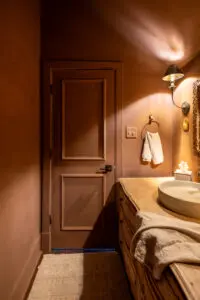
Limewash is the softer, flatter cousin of Venetian plaster. It goes on with a brush, dries to a chalky matte and leaves gentle, cloudy movement across the wall. Brands like JH Lime Wall make lime based paints for interiors.
Lime pulls in carbon dioxide as it cures, which is how it hardens back into something close to stone. It’s also breathable and low odor.
Where Venetian plaster can shine, limewash stays flat and soft. The color shifts a little across the wall, and that’s the whole point. It looks just as good in a new build as in an older home.
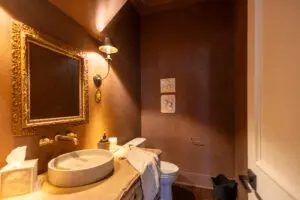
Limewash walls and Venetian plaster both give you something flat paint can’t: depth you can actually feel. Go with limewash for a soft, chalky matte, and Venetian plaster when you want polish and a real showpiece. Both are interior finishes for us, and both look their best in the hands of someone who does them often. If you’re in the Memphis or Nashville area, reach out through our website and we’ll set up a time to take a look.
Frequently Asked Questions
What are limewash walls?
They’re interior walls finished with a lime based paint that’s brushed on in thin coats. It dries to a soft, chalky matte with gentle variation in the color, so the wall looks a little cloudy and lived in rather than flat and uniform. It’s a natural, breathable finish, and it suits both older homes and new builds.
Is limewash paint good for interior walls?
Yes, and indoors is the only place we use it. Limewash looks best on walls that don’t take a lot of scrubbing, like living rooms, bedrooms and dining rooms. In busy spots like mudrooms or kids’ hallways, we’ll usually talk through whether a washable paint makes more sense. It touches up and blends easily if a spot gets marked.
What’s the difference between limewash and Venetian plaster?
Limewash is a thin paint that’s brushed on and dries flat and chalky. Venetian plaster is troweled on in layers of lime and marble dust, then burnished, so it has more depth and can be anything from matte to high gloss. Limewash is softer and more relaxed. Venetian plaster takes more labor and usually becomes the showpiece of the room.
Can you limewash exterior brick?
We don’t. At Caldwell Painting, limewash is an interior finish only. For exterior brick we use Romabio Masonry Flat, a breathable mineral paint made for masonry. If you love the soft limewash look, we’re happy to talk about it for your interior walls.
Does Venetian plaster cost more than limewash?
Usually, yes. Venetian plaster goes on in several troweled layers and then gets burnished by hand, so it takes a lot more time and skill than brushing on limewash. That’s why many homeowners save it for one feature, like a fireplace or a powder room, and use limewash or paint on the rest of the walls.
Keep reading
- Discover Vasari Carrera Venetian Plaster: Timeless Elegance for Walls, Fireplaces, and Bathrooms
- Breathable Brick Paint: A Smart Choice for Memphis Homes
- Eco Friendly Paints: Benjamin Moore, Sherwin Williams, and Farrow and Ball for Healthier Homes

Bart Caldwell is a entrepreneur and business owner. With his ambition, tenacity, and dedication to hard work, he has built Caldwell Painting that is respected throughout the industry for their high-quality services and innovative solutions. Bart’s passion for excellence in all service areas has seen him build a solid reputation as a reliable problem solver and leader. His reputation of professionalism, integrity and quality has made him one of the industry’s most sought-after business owners.